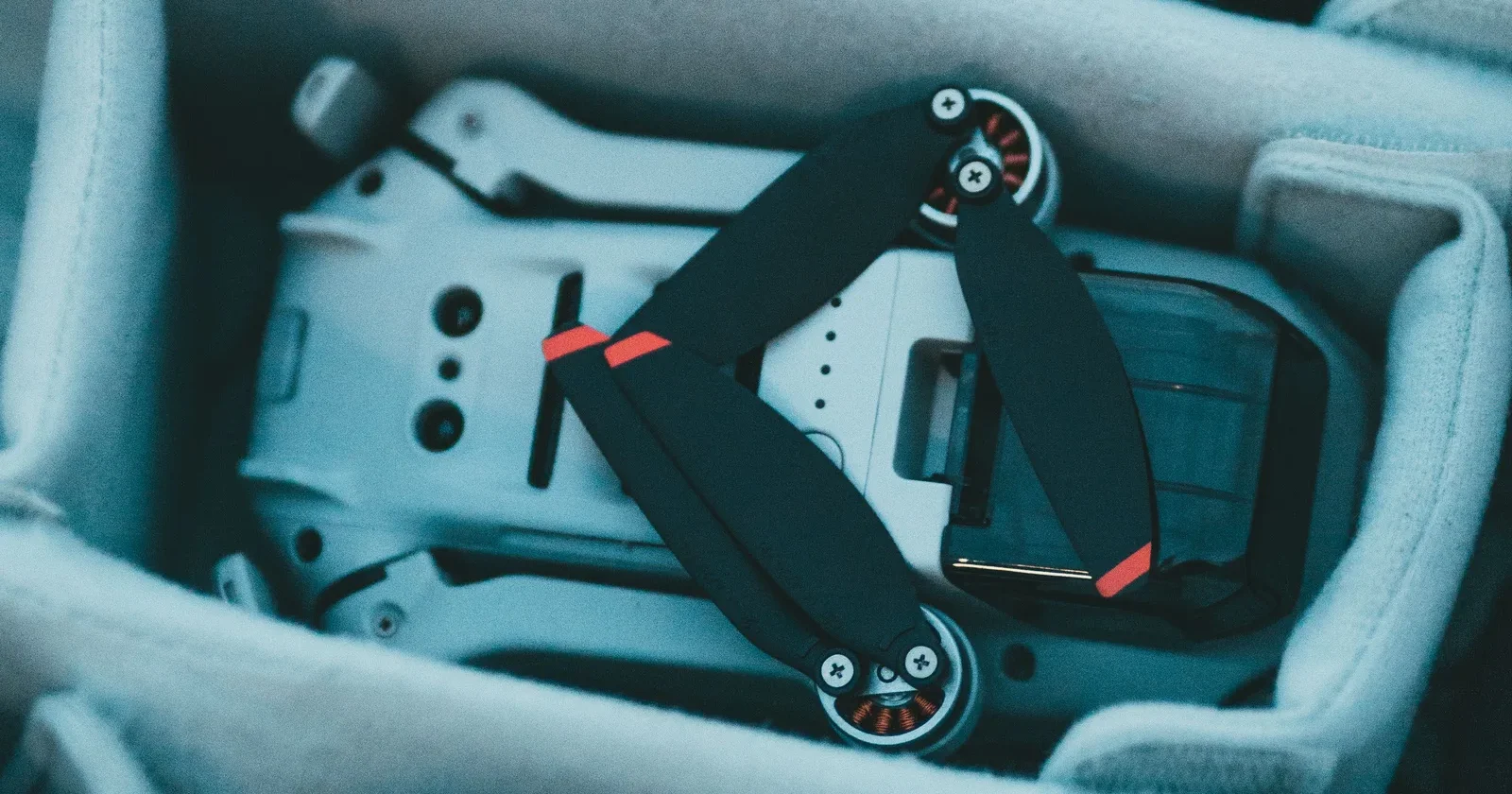
Image: Erik Mclean via Pexels
Quick answer
The UK Civil Aviation Authority has launched a six-point lithium battery safety checklist for the October half-term. For drone owners the key rule comes from the CAA’s Pack Right guidance: spare batteries go in the cabin with you, never in checked luggage, protected from damage. Airlines set limits in watt-hours (Wh), so check the rating on your battery and your airline’s rules before you pack.
The UK Civil Aviation Authority has launched a lithium battery safety checklist ahead of the October half-term, when it says almost three million passengers will fly from airports across England and Wales. It’s aimed at power banks, phones, tablets and vapes, but if a drone is going on holiday with you, its batteries are lithium too.
What the CAA is asking passengers to do
The CAA’s six-point checklist says:
- Always take power banks in the cabin, and check with your airline that they meet its size and quantity limits.
- Don’t charge your power bank on any flight.
- If you want to use a power bank on a flight, check first that your airline allows it, and keep it easy to reach.
- If a power bank, vape, phone or tablet starts to get hot, switch it off, stop charging and tell the cabin crew immediately.
- If a power bank or device starts to smoke, tell the cabin crew immediately. They’re trained to deal with it safely.
- Always carry vapes in the cabin, but never vape on board.
The CAA’s research found that awareness of lithium battery travel rules has risen to 86% among recent flyers, up from 81% last year. But almost one in three passengers (31%) still wrongly believe that items containing lithium batteries should go in checked luggage.
“Knowing where to pack these devices is important, but passengers should also know what to do if one starts overheating during a flight,” said Glenn Bradley, Head of Flight Operations at the CAA.
What it means for drone batteries
The checklist doesn’t mention drones by name, but the CAA’s Pack Right guidance covers spare batteries, and it’s clear:
- Spare drone batteries go in your hand luggage. The CAA says to “keep spare batteries with you in the cabin and protect them from damage.” A hard case or the bag your drone came in does the job.
- If your cabin bag is taken at the gate to go in the hold, the CAA says to remove any batteries or lithium-powered devices first.
- Leave damaged batteries at home. The CAA says batteries that show signs of damage, overheating or swelling should not be used and should never be carried on an aircraft.
- Follow your airline’s rules and the manufacturer’s instructions for carrying and using lithium batteries, and buy spares from reputable suppliers and brands.
Check the Wh rating on your battery
If your airline sets limits based on a battery’s power, they’ll be in watt-hours (Wh). The CAA’s guide:
- Under 100Wh: common in phones, laptops and cameras. The CAA recommends you take these devices in the cabin.
- 100Wh to 160Wh: you need airline approval to carry these.
- Over 160Wh: not allowed in passenger baggage. They have to go separately as dangerous goods cargo.
Look for the Wh rating on your battery’s label. If it isn’t shown, the CAA’s formula is volts × milliamp hours ÷ 1000 = Wh. Your airline has the final say on how many spares you can take, so check with it before you pack.
Flying when you get there
The CAA’s battery rules get your drone there safely. Flying it at your destination is a separate matter, and drone rules vary from country to country, so check the local rules before you take off. If you’re flying in the UK over half-term, our UK drone laws guide, Flyer ID vs Operator ID explainer and where can I fly my drone guide cover the basics. For looking after your batteries between trips, see our battery care and storage guide.
Sources
- UK Civil Aviation Authority: Regulator launches lithium battery safety checklist ahead of busy half-term travel period (22 October 2026)
- UK Civil Aviation Authority: Pack right. Safe flight. (checked 22 October 2026)