Photo: Bob Brewer / Unsplash
Quick answer
In the UK you can fly where the Drone Code’s distance rules allow, below 120m (400ft), and outside any airspace restriction such as an airport’s Flight Restriction Zone (FRZ), unless you have permission. Check the Drone Safe map and NOTAMs before every flight, look out for local byelaws and signs, and get the landowner’s OK if you’re taking off from their land. How close you can fly to people and buildings depends on your drone’s weight and class.
“Where can I fly my drone?” is the question that follows every unboxing. The honest answer is “it depends”, but not in a vague way. It depends on four things you can check in about five minutes: your drone’s sub-category, the airspace above you, any temporary restrictions, and the ground you’re standing on.
This guide takes you through all four, in the order we’d check them, using the CAA’s Drone Code and airspace guidance as read on 18 October 2026.
1. Know what your drone’s sub-category allows
Before looking at any map, work out how close you’re allowed to be to people and built-up areas. That’s set by your drone’s weight and class mark.
| Your drone | Sub-category | People | Built-up and recreational areas |
|---|---|---|---|
| Under 250g, or UK0, UK1 or C0 (C1 until 31 Dec 2027) | Over People (A1) | Can fly close to and over uninvolved people, never over crowds | Can fly within them |
| UK2 class, with an A2 CofC | Near People (A2) | At least 30m from uninvolved people (5m in low-speed mode), not over them | Can fly within them |
| Under 2kg, not UK2 or C2, with an A2 CofC | Near People (A2) | At least 50m from uninvolved people, not over them | Can fly within them |
| Legacy drones (on sale before 1 Jan 2026), UK2 to UK4, or privately built, under 25kg | Far from People (A3) | At least 50m from uninvolved people, not over them | At least 150m away |
A few definitions from the Code help here. “Uninvolved people” includes people in cars, lorries, trains, boats and buildings. A crowd is any group that can’t move away quickly because of the number of people around them, and nobody can fly over a crowd, whatever the drone. Residential areas include villages, housing estates and schools; recreational areas include beaches, parks and sports facilities. A single building at least 50m from any other isn’t treated as a built-up area, but you must still stay 50m from it in A3.
Not sure which applies to your drone? Our UK drone laws 2026 guide explains class marks, and do I need a CAA licence for a DJI Mini? covers the sub-250g Minis specifically.
2. Stay under 120m (400ft), measured from the ground below
The legal height limit is 120m from the closest point of the earth’s surface. That catch matters on hills and cliffs. Fly off a cliff top and you may be well over 120m above the sea below, so you’d need to adjust your flight path. Whatever height you fly at, keep looking and listening for air ambulances, police helicopters and low-flying military aircraft, which can all be below 120m.
3. Check the airspace: FRZs and other restrictions
Airspace rules apply wherever you fly outdoors, even over your own garden. The CAA is clear that this includes small drones under 250g too.
Airport Flight Restriction Zones
Most airports, airfields, heliports and spaceports have an FRZ, and you must not fly in one without permission from the site. For an aerodrome, the CAA explains that an FRZ is built from three parts, all reaching 2,000ft above ground level:
- A circle matching the Aerodrome Traffic Zone, with a radius of 2 or 2.5 nautical miles depending on the aerodrome, centred on the longest runway (or a 2 nautical mile circle where there’s no ATZ).
- Runway Protection Zones: rectangles 1km wide stretching 5km out from the end of each runway.
- Extra areas that push the zone out to 1km beyond the aerodrome boundary where the circle doesn’t already cover it.
Spaceport FRZs are 5km circles around the launch pad. The exact shape varies by site, which is why you should always look at a map rather than guess. If you want to fly inside an FRZ, contact the site’s air traffic control (or the aerodrome operator if there’s no ATC). Contact details are in the UK Aeronautical Information Publication.
Watch out for small airfields too. The CAA notes that some unlicensed airfields have no FRZ and may not appear on maps or apps, but you still must not fly anywhere you could endanger aircraft. Windsocks, hangars and light aircraft are your clues.
Permanent and temporary restrictions
Beyond airports, permanent restrictions often cover prisons, military bases and ranges, royal palaces and government buildings. Temporary restrictions pop up for planned events and at very short notice for emergencies, so the CAA says to check every time you fly. If you’re near an emergency incident, such as a fire or a crash, you must keep out of the way and stop flying unless the emergency services say you can continue.
4. Use the right tools, and know their limits
These are the sources the CAA points to:
- Drone Safe map: the Drone Code points to this NATS map for FRZs and other airspace restrictions. Some restrictions, especially short-notice ones, aren’t shown.
- NATS drone website and NATS pre-flight bulletins: for NOTAMs (Notices to Aviation), the official notices about temporary hazards such as a balloon festival or airshow.
- UK AIP, ENR 5.1: the official source for prohibited, restricted and danger areas, including FRZs. Heavy going, but definitive.
- Drone apps: plenty show airspace and NOTAMs. The CAA’s warning is that some aren’t up to date and that you’re responsible for making sure the information you use is accurate.
- Your drone’s geo-awareness: DJI drones and others warn you about restricted areas. The Code says keep it updated and never disable it, but don’t treat it as your only check, as the CAA says built-in data may not always be current.
A simple routine before any new spot: check the Drone Safe map, check NOTAMs for the day, then have a look at the drone’s own map as a third opinion.
5. Check the ground: byelaws, landowners and wildlife
This is the layer apps rarely show.
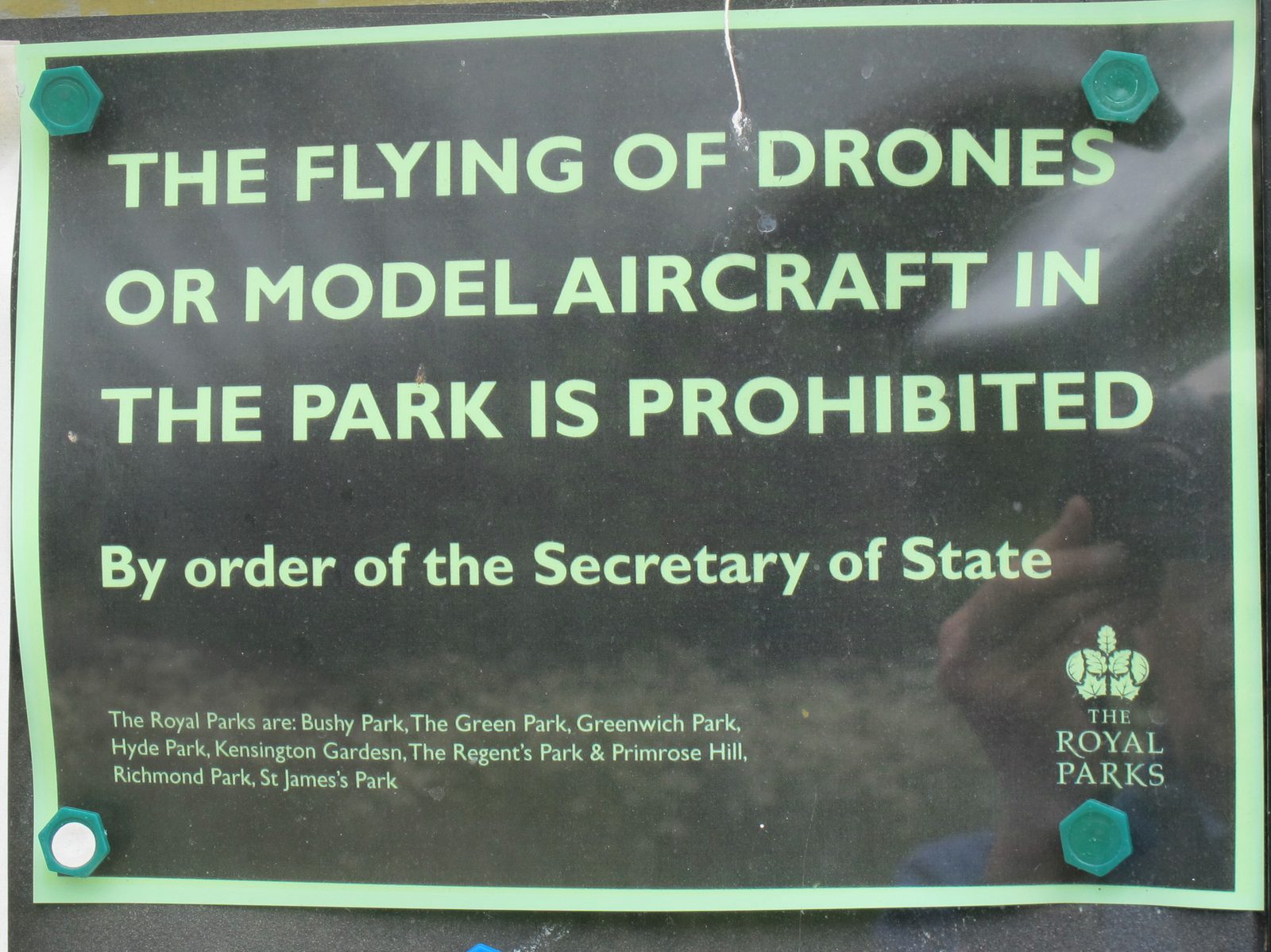
- Byelaws can restrict where you take off and land, and the CAA says they’re unlikely to appear in apps. Look for signs at car parks and entrances, and check the local council or site owner’s website.
- Landowner permission: airspace rules don’t give you the right to take off from someone’s land. The CAA reminds pilots that you may need permission from property or landowners, and if you crash or force-land on private property you must get the owner’s permission before going to fetch your drone.
- Sites of Special Scientific Interest: flying may be restricted where it would disturb wildlife. Natural England, Natural Resources Wales, NatureScot and Northern Ireland’s environment agency publish details.
- Animals: don’t fly where you’ll disturb or endanger animals, from nesting birds to livestock.
- Tall structures: cranes, masts and wires can make a spot unsafe even if the airspace is clear.
6. Respect privacy
Being legally allowed to fly somewhere isn’t the same as being welcome. Fly at a reasonable height so you don’t interfere with people’s use and enjoyment of their land, and think before filming people who haven’t agreed to it. Our UK drone laws 2026 guide covers privacy in more detail.
Can I fly in my garden, the park or on the beach?
Your garden: often yes with a sub-250g drone in A1, as long as no airspace restriction applies (some homes sit inside an FRZ) and you respect neighbours. With a heavier legacy drone in A3, a garden in a residential area is usually ruled out by the 150m rule.
A park or beach: both count as recreational areas. Sub-250g drones in A1 can fly there, but never over crowds, and busy beaches and parks are on the CAA’s list of places where crowds form. Then check for byelaws and signs, as some parks have their own rules.
Near a road: people in cars and lorries count as uninvolved people, so the distance rules for your sub-category apply to them too.
Frequently asked questions
Do airspace restrictions apply to drones under 250g?
Yes. The CAA says airspace restrictions apply to all drones and model aircraft, including those up to 250g.
What’s an FRZ?
A Flight Restriction Zone, a protected area around an airport, airfield, heliport or spaceport where you cannot fly without the site’s permission.
Is my drone’s geo-fencing enough?
No. Keep it updated and switched on, but the CAA says manufacturers’ data may not always be up to date. Check an official source too.
Do I need permission to fly over private land?
Airspace rules apply regardless of who owns the land, but taking off from or landing on private land needs the landowner’s permission, and you should fly at a height that doesn’t interfere with their use of it.
Where can I report a dangerous drone?
The CAA advises calling the police on 101, or airport security if you’re at an airport.