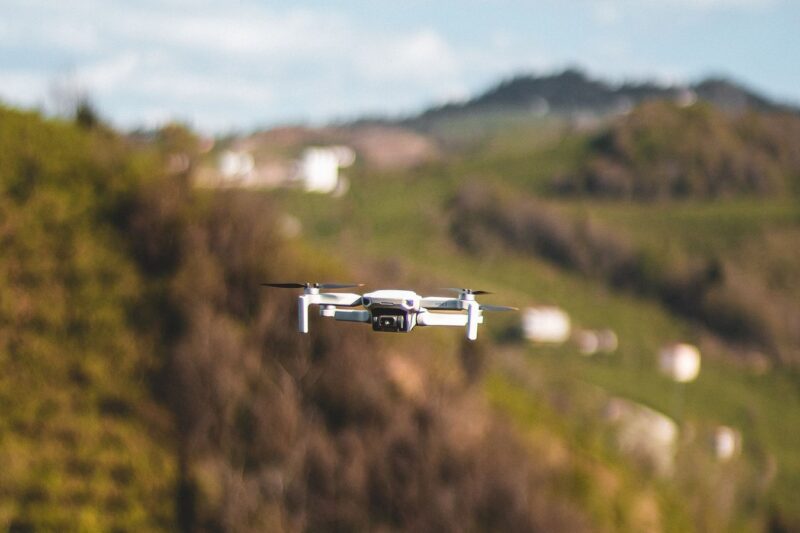
Photo: Linford Miles / Unsplash
Quick answer
- You need a Flyer ID (free online test, lasts five years) for any drone of 100g or more.
- You need an Operator ID (£12.34 a year) if your drone weighs 250g or more, or 100g or more with a camera.
- Stay below 120m (400ft), keep the drone in direct sight, never fly over crowds, and never enter an airport Flight Restriction Zone without permission.
- Sub 250g, UK0, UK1 and C0 drones (and C1 until the end of 2027) can fly Over People (A1).
- Remote ID is already mandatory for UK1, UK2 and UK3 drones, and for nearly everyone else from 1 January 2028.
New rules arrived on 1 January 2026, bringing fresh ID thresholds, UK class marks, Remote ID deadlines and a green light for night flying. If you are brand new, welcome: once it clicks, it is all quite logical. Every rule below comes from the Civil Aviation Authority (CAA), and we checked each one against its pages on 18 October 2026.
The two IDs: Flyer ID and Operator ID
Almost everything starts here. (For the “is it a licence?” question, see Do I need a licence to fly a drone in the UK?)
Flyer ID
The Flyer ID proves you know how to fly safely and legally. You get it by passing the CAA’s free online theory test: 40 multiple choice questions, a pass mark of 30, open book (you can read the Drone and Model Aircraft Code, or Drone Code, as you go) and as many retakes as you need. It lasts five years, and the test is based on the rules in force from 1 January 2026.
Operator ID
The Operator is the person or organisation responsible for the drone: maintaining it, making sure whoever flies it holds the right ID, and making sure it is flown legally. It is usually the owner. The Operator ID costs £12.34 a year, you must be 18 or over, and one ID covers all your drones. Label each drone on its main body in block capitals taller than 3mm, using your Operator ID, never your Flyer ID.
Which IDs do you need?
The CAA’s 2026 table, in our own layout:
| Drone weight | Example classes | Flyer ID | Operator ID |
|---|---|---|---|
| 250g to under 25kg | UK1, UK2, UK3, UK4 | Required | Required |
| 100g to under 250g, with a camera | UK0 with a camera | Required | Required |
| 100g to under 250g, no camera | UK0 without a camera | Required | Optional |
| Under 100g | Not applicable | Recommended | Optional |
The headline for 2026: 100g is now the key number, so a sub 250g camera drone needs both IDs. See Do I need a CAA licence for a DJI Mini? for the Mini specifics.
Three exceptions: flying only indoors (or in a closed netted area) needs no IDs; children can get a Flyer ID at any age, with a parent present to register if under 13 and a supervisor aged 16 or over when flying if under 12; and visitors cannot use overseas registrations, so they need UK IDs too.
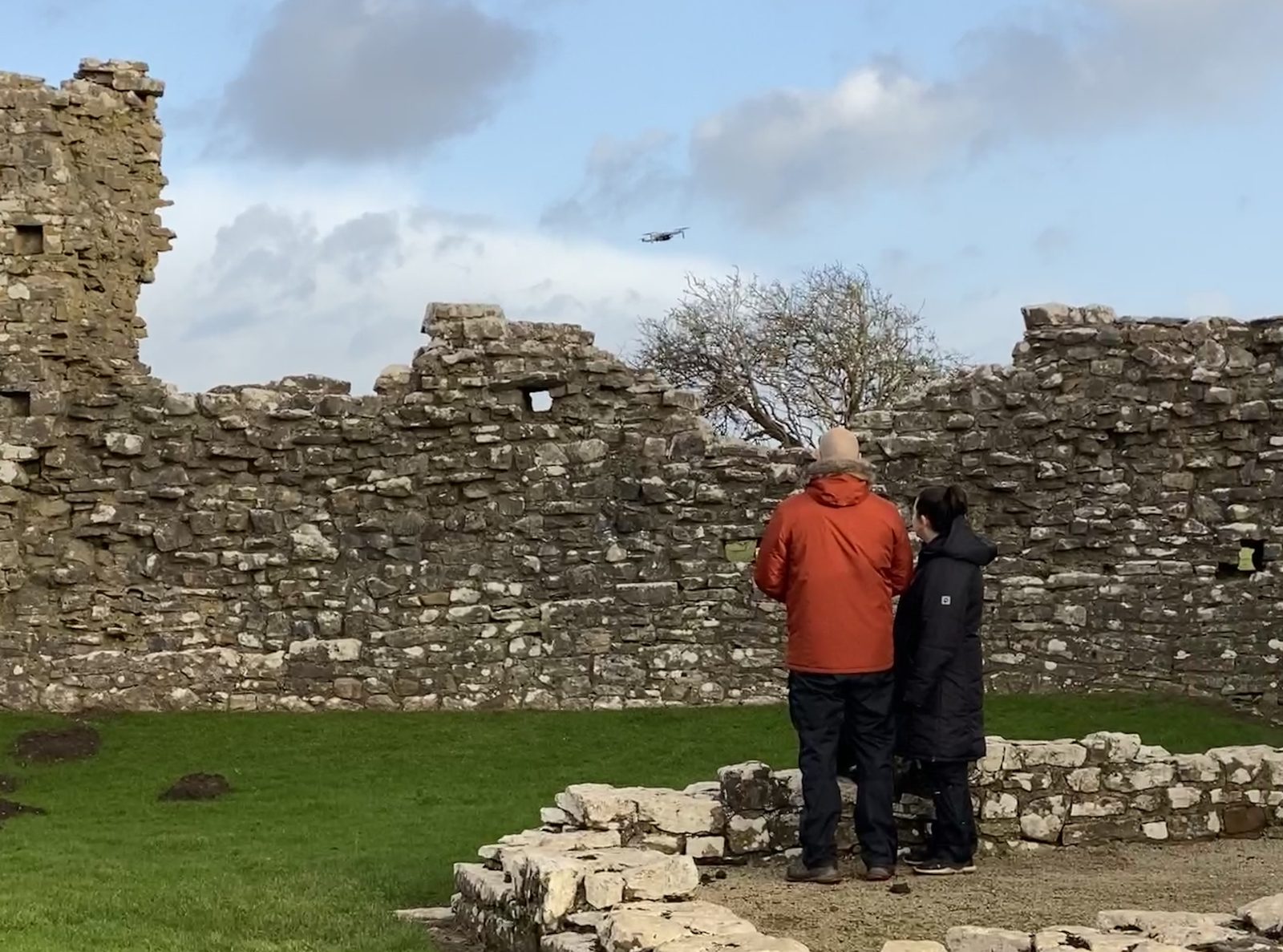
The categories: Open, Specific and Certified
The CAA sorts flying by risk: the Open Category for low risk, simple flying (where nearly every hobbyist lives), the Specific Category for moderate risk flying that needs CAA authorisation, and the Certified Category for high risk, complex flying.
Over People (A1)
For drones under 250g, or marked UK0, UK1 or C0, plus C1 drones from 1 January 2026 until 31 December 2027. You can fly closer than 50m to uninvolved people and over them, and fly in residential, recreational, commercial and industrial areas. You can never fly over crowds.
Near People (A2)
For UK2 drones (and C2 until 31 December 2027), or unmarked drones under 2kg. You need an A2 Certificate of Competency (A2 CofC) on top of both IDs.
- UK2 or C2: stay at least 30m from uninvolved people, or 5m in low speed mode, and don’t fly over them.
- Unmarked, under 2kg: stay at least 50m from uninvolved people, and don’t fly over them.
The A2 CofC comes from CAA approved providers (Recognised Assessment Entities). It combines self directed practical training with a theory test of at least 30 questions, needs a Flyer ID first, has no minimum age and lasts five years.
Far from People (A3)
For UK2, UK3 and UK4 drones, privately built drones under 25kg, drones placed on the market before 1 January 2026 under 25kg, and C2, C3 and C4 drones until 31 December 2027. You must:
- stay at least 50m from uninvolved people, and never fly over them
- stay at least 150m from residential, recreational, commercial and industrial areas
- keep 50m from an individual building standing 50m or more from any other
A Flyer ID on its own covers A1 and A3, the starting point for most people.
The Specific Category
If your flying falls outside the Open rules, you need an Operational Authorisation from the CAA, whether it’s for work or a hobby. The simplest route is PDRA01, which the CAA says covers drones from 250g to 25kg within visual line of sight anywhere in the UK, subject to airspace restrictions, including built-up areas. Anything beyond that, such as flying out of sight, near crowds or above 120m, goes through a UK SORA risk assessment, which replaced the old Operating Safety Case route on 23 April 2025. Pilots need a qualification such as the GVC or the Level 1 Remote Pilot Certificate, and the CAA says the GVC stops being issued on 31 December 2027.
Class marks: UK0 to UK6, and the C mark transition
A class mark is the manufacturer’s declaration that a drone meets set technical standards, and it tells you where you can fly.
The UK classes
Since 1 January 2026, every new model placed on the UK market must carry a UK class mark:
| UK class | Maximum weight (including payload) | Where it can fly |
|---|---|---|
| UK0 | Less than 250g | Over People (A1) |
| UK1 | Less than 900g | Over People (A1) |
| UK2 | Less than 4kg | A2 with an A2 CofC, otherwise A3 |
| UK3 | Less than 25kg, under 3m in size | Far from People (A3) |
| UK4 | Less than 25kg | Far from People (A3) |
| UK5 | Less than 25kg | Operational Authorisation needed |
| UK6 | Less than 25kg, under 3m in size | Operational Authorisation needed |
Older models already on sale can still be sold, so shop shelves in 2026 hold a mix of UK marked, C marked and unmarked drones.
European C marks
Until 31 December 2027, you can fly a C class drone as if it were the matching UK class, so a C0 counts as UK0. From 1 January 2028, C marked drones become legacy drones and you fly them by weight.
Legacy drones (no class mark)
Go by weight: under 250g flies in A1, under 2kg in A2 (with an A2 CofC), and under 25kg in A3. Remember that modifications that raise the take-off weight, such as a heavier battery, can move you into a different sub-category.
Remote ID: the dates that matter
Remote ID broadcasts your drone’s identity and position in flight, so the police and other authorities can tell whether it is being flown legally. The CAA gives every registered operator a Remote ID number in the My registration area. The Open Category dates:
| Drone | Remote ID mandatory from |
|---|---|
| UK1, UK2 and UK3 | 1 January 2026 |
| UK0, 100g or more with a camera | 1 January 2028 |
| UK4 (for example, model aircraft) | 1 January 2028 |
| Legacy, 100g or more with a camera | 1 January 2028 |
| Privately built, 100g or more with a camera | 1 January 2028 |
From 1 January 2028 the CAA says Remote ID applies to all drone and model aircraft flying, unless you have an exemption, and it recommends switching it on now. Its table lists UK classes and legacy drones but not C classes, so C1 and C2 owners should check the CAA page and switch it on to be safe. No personal details are broadcast.
Golden rule: the last three characters of your Remote ID are your private key. Never write them on the drone or share them, and delete your Remote ID before selling or lending the drone.
Where you can and can’t fly
These Drone Code rules apply on every flight:
- Height: below 120m (400ft) from the closest point of the ground, even over cliffs and hills.
- Direct sight: close enough to tell which way the drone is facing, without binoculars, a phone screen or goggles. Normal glasses are fine. Flying by FPV needs an observer beside you.
- People: outside A1, keep 50m horizontally from uninvolved people, including those in buildings and vehicles. Friends flying with you don’t count.
- Crowds: never fly over them, whatever your drone.
- Hazards: keep clear of emergency incidents and follow temporary restrictions, byelaws and wildlife protections.
- Night: since 1 January 2026, a green flashing light must be on throughout any night flight in the Open Category. The CAA notes that UK0, UK4, C0, C4 and legacy drones may need one fitted, and its weight counts towards the drone’s.
Flight restriction zones and how to check them
What an FRZ looks like
Most airports, airfields, heliports and spaceports have a Flight Restriction Zone (FRZ), and you must not fly in one without permission. The CAA describes an airport FRZ as a cylinder of 2 or 2.5 nautical miles around the longest runway, plus 1km wide runway protection zones stretching 5km from each runway end, all up to 2,000ft. Spaceport zones are a 5km radius cylinder. Small unlicensed airfields may have no FRZ, but you still must not endanger aircraft; the CAA warns this can mean up to five years in prison.
To fly in an FRZ, ask the site’s air traffic control (or the aerodrome operator) for permission.
Other restrictions
Permanent restrictions sit over places such as prisons, military bases, royal palaces and government buildings. Temporary ones appear for events and emergencies, sometimes at very short notice, and they apply to sub 250g drones too.
How to check before every flight
- Check the NATS UAS Restriction Zones, and the UK Aeronautical Information Publication (section ENR 5.1) as the official source.
- Check NOTAMs (Notices to Aviation) for temporary activity.
- Use a drone app if it helps, but the CAA warns that apps and built-in maps aren’t always up to date, and you are responsible for what you rely on.
- Keep your geo-awareness software updated, and never disable it.
- Look around on arrival for signs, byelaws, or windsocks that hint at an unlisted airfield.
Insurance
Flying purely for fun, insurance is optional. Flying for any commercial reason, such as paid photography or using a drone on a farm or in a school, you must hold at least third party insurance. Hobbyists can still be held liable for injury or damage, so cover is worth a look.
Privacy
Recording people where they expect privacy, such as in their garden, is likely to break data protection law, and identifiable footage may fall under UK GDPR. Think before you post, and delete what you don’t need.
Flying abroad
UK Flyer IDs and Operator IDs are not valid outside the UK, so check with the regulator of the country you are visiting. In EU countries, the CAA says you will usually need to register as an operator there. At the airport, carry batteries in hand luggage in LiPo safe bags, follow your airline’s watt hour limits, and never switch the drone or controller on, as it can trigger drone detection alarms.
What has changed since 1 January 2026
- New ID thresholds starting at 100g.
- UK class marks (UK0 to UK6) on every new model.
- C marks recognised until 31 December 2027, then treated as legacy.
- C1 drones allowed in A1 until 31 December 2027.
- New names: Over People (A1), Near People (A2) and Far from People (A3).
- Remote ID mandatory for UK1, UK2 and UK3 drones.
- Green flashing light for night flying.
- Operators can be prosecuted if someone without the right ID flies their drone.
- 50m from isolated buildings in A3, refined in a March 2026 Drone Code update.
Frequently asked questions
Is it illegal to fly a drone without registering?
Yes, if your drone needs IDs. The CAA says you can be fined, or in the most serious cases imprisoned.
Can I fly a drone in my own garden?
Airspace rules apply even over your own land, so you still need the right IDs and must follow your sub-category’s distance rules and any restrictions.
Does a drone under 100g need anything?
No IDs, though the CAA strongly recommends the Flyer ID test, and the Drone Code still applies.
When does Remote ID become mandatory for my DJI Mini?
For a UK0 or legacy Mini with a camera, 1 January 2028. We’d switch it on now.
Do I need an A2 CofC?
Only to fly in Near People (A2). Most sub 250g hobbyists never need one.
Keep reading
- UK drone laws hub
- Best drone for beginners UK
- DJI Mini 5 Pro vs Mini 4 Pro
- Help hubs: DJI Mini 5 Pro and DJI Mini 4 Pro
Rules last checked against the CAA on 18 October 2026. Always check caa.co.uk before you fly.
Sources (all read on 18 October 2026)
- CAA, Getting what you need to fly legally: https://www.caa.co.uk/drones/open-category/drone-code/getting-what-you-need-to-fly-legally/
- CAA, Registering to fly drones and model aircraft: https://www.caa.co.uk/drones/open-category/getting-started-with-drones-and-model-aircraft/registering-to-fly-drones-and-model-aircraft/
- CAA, Prepare for the Flyer ID theory test: https://www.caa.co.uk/drones/open-category/getting-started-with-drones-and-model-aircraft/prepare-for-the-flyer-id-theory-test/
- CAA, Get an Operator ID: https://www.caa.co.uk/drones/open-category/getting-started-with-drones-and-model-aircraft/get-an-operator-id/
- CAA, Labelling your drone or model aircraft: https://www.caa.co.uk/drones/open-category/getting-started-with-drones-and-model-aircraft/labelling-your-drone-or-model-aircraft/
- CAA, Children and parent guidance: https://www.caa.co.uk/drones/open-category/getting-started-with-drones-and-model-aircraft/children-and-parent-guidance/
- CAA, Introduction to more advanced flying: https://www.caa.co.uk/drones/open-category/moving-on-to-more-advanced-flying/introduction-to-more-advanced-flying/
- CAA, A2 Certificate of Competency: https://www.caa.co.uk/drones/specific-category/remote-pilot-qualifications/a2-certificate-of-competency-a2-cofc/
- CAA, Specific Category overview: https://www.caa.co.uk/drones/specific-category/specific-category-overview/
- CAA, Level 1, 2 and 3 Remote Pilot Certificates and GVC: https://www.caa.co.uk/drones/specific-category/remote-pilot-qualifications/level-1-2-and-3-remote-pilot-certificates-and-gvc/
- CAA, Class marks: https://www.caa.co.uk/drones/open-category/getting-started-with-drones-and-model-aircraft/class-marks/
- CAA, Remote ID (RID): https://www.caa.co.uk/drones/open-category/moving-on-to-more-advanced-flying/remote-id-rid/
- CAA, Getting an Operator ID before you fly (points 30 to 35): https://www.caa.co.uk/drones/open-category/drone-code/getting-an-operator-id-before-you-fly-points-30-to-35/
- CAA, Flying safely and responsibly (points 1 and 2): https://www.caa.co.uk/drones/open-category/drone-code/flying-safely-and-responsibly-points-1-and-2/
- CAA, Where you can fly (points 3 to 9): https://www.caa.co.uk/drones/open-category/drone-code/where-you-can-fly-points-3-to-9/
- CAA, Making every flight safe (points 10 to 20): https://www.caa.co.uk/drones/open-category/drone-code/making-every-flight-safe-points-10-to-20/
- CAA, Flying at night in the Open Category: https://www.caa.co.uk/drones/open-category/getting-started-with-drones-and-model-aircraft/flying-at-night-in-the-open-category/
- CAA, Airspace restrictions: https://www.caa.co.uk/drones/open-category/moving-on-to-more-advanced-flying/airspace/airspace-restrictions/
- CAA, Aerodromes, heliports and spaceports: https://www.caa.co.uk/drones/open-category/moving-on-to-more-advanced-flying/airspace/aerodromes-heliports-and-spaceports/
- CAA, Insurance requirements: https://www.caa.co.uk/drones/open-category/moving-on-to-more-advanced-flying/insurance-requirements/
- CAA, Privacy rules when flying drones: https://www.caa.co.uk/drones/open-category/moving-on-to-more-advanced-flying/privacy-rules-when-flying-drones/
- CAA, Flying drones abroad: https://www.caa.co.uk/drones/open-category/moving-on-to-more-advanced-flying/flying-drones-abroad/
- CAA, Drone Code updates: https://www.caa.co.uk/drones/open-category/drone-code/updates/
- NATS UAS Restriction Zones: https://nats-uk.ead-it.com/cms-nats/opencms/en/uas-restriction-zones/
- CAA My registration: https://register-drones.caa.co.uk/