Photo: Marc-Antoine Dubé / Unsplash
We may earn a commission if you buy through links on this page, at no extra cost to you. It never changes what we recommend. As an Amazon Associate, Drones Unplugged earns from qualifying purchases. Read our affiliate disclosure.
Quick answer
Check your drone’s max wind speed resistance (10.7 m/s, about 24mph, for most DJI Minis, Litos, Neo 2 and Flip; 12 m/s, about 27mph, for the Mini 5 Pro, Air 3S and Mavic 4 Pro) and treat it as a ceiling, not a target. Remember the wind is usually stronger up high than where you’re standing. In the cold, start with fully charged batteries warmed to at least 10°C (ideally 20°C or more), expect shorter flights, and land earlier. Most DJI drones are rated down to -10°C, but some, like the Lito 1, only to 0°C.
British weather doesn’t do “perfect flying day” very often. Most of the year you’re dealing with a breeze, a chill, or both. You can still get great flights in, but wind and cold change how a small drone behaves, how long its battery lasts and how safely it can come home.
This guide explains what the numbers on the spec sheet really mean and gives you a simple routine for blustery and cold days. It’s built on DJI’s official specs and manuals and the CAA’s Drone Code, all read on 18 October 2026.
What “max wind speed resistance” actually means
Every DJI spec page lists a max wind speed resistance. It’s the strongest wind DJI says the aircraft can withstand, not a comfortable working limit. Fly near it and the drone will spend most of its battery fighting to hold position, may struggle to fly back upwind, and the footage will suffer. The Mini 5 Pro manual notes that the gimbal may vibrate when recording in strong winds, and that flight speed is further limited in high winds in some modes.
Here’s what DJI quotes for current models (from DJI UK spec pages; mph and km/h are our conversions):
| Drone | Max wind speed resistance | Approx. mph | Operating temperature |
|---|---|---|---|
| DJI Mini 5 Pro | 12 m/s | 27mph (43 km/h) | -10° to 40°C |
| DJI Air 3S | 12 m/s | 27mph (43 km/h) | -10° to 40°C |
| DJI Mavic 4 Pro | 12 m/s | 27mph (43 km/h) | -10° to 40°C |
| DJI Mini 4 Pro | 10.7 m/s | 24mph (39 km/h) | -10° to 40°C |
| DJI Lito X1 | 10.7 m/s | 24mph (39 km/h) | -10° to 40°C |
| DJI Lito 1 | 10.7 m/s | 24mph (39 km/h) | 0° to 40°C |
| DJI Neo 2 | 10.7 m/s (Level 5) | 24mph (39 km/h) | -10° to 40°C |
| DJI Flip | 10.7 m/s (Level 5) | 24mph (39 km/h) | -10° to 40°C |
DJI describes 10.7 m/s as “Level 5” on some spec pages. On the Met Office’s Beaufort scale, force 5 is a “fresh breeze” of roughly 9 to 11 m/s, and 12 m/s sits in force 6, a “strong breeze”. In other words, these ratings are for a properly blowy day, not a gale.
Wind: why the forecast on the ground isn’t the whole story
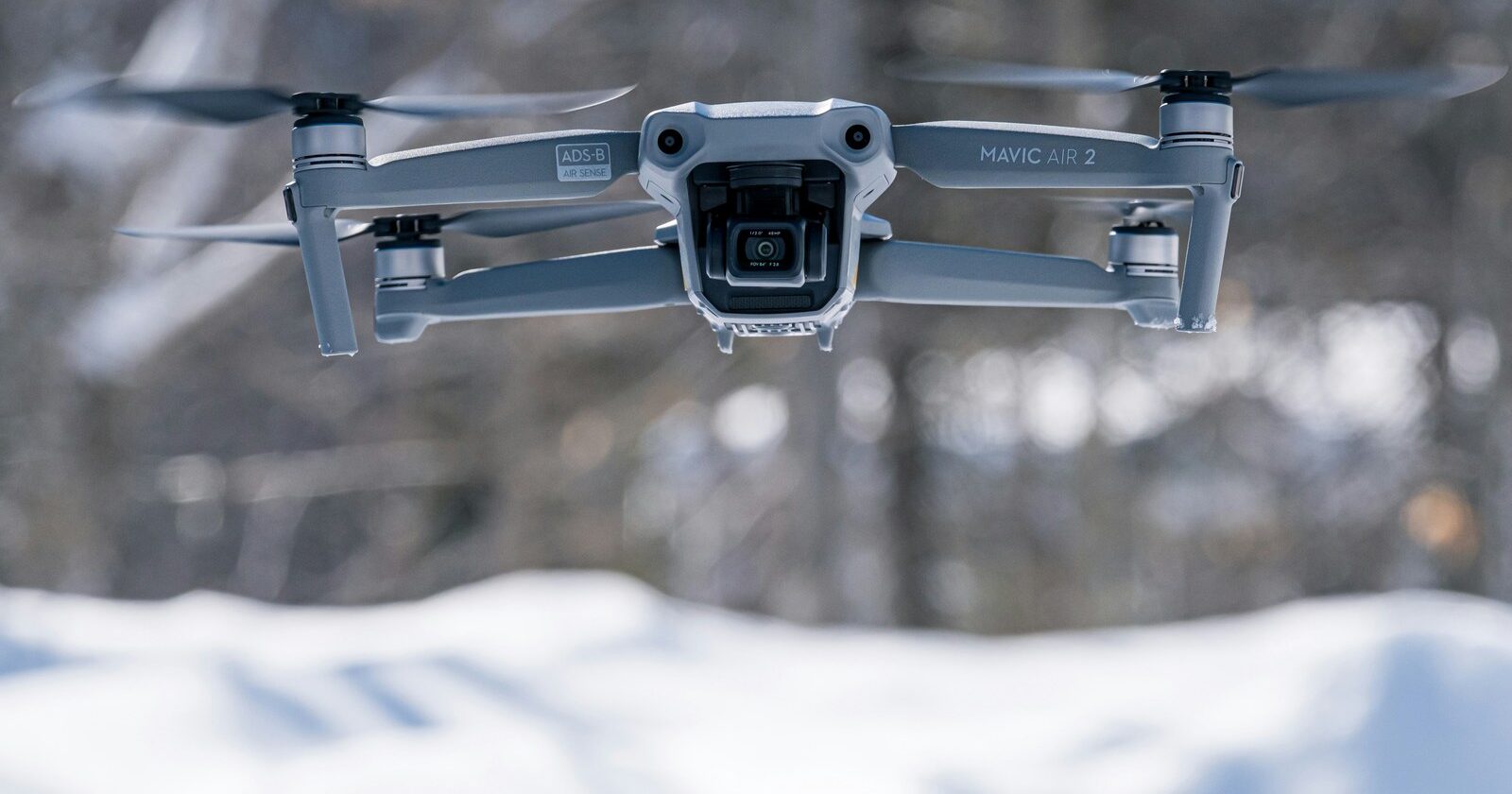
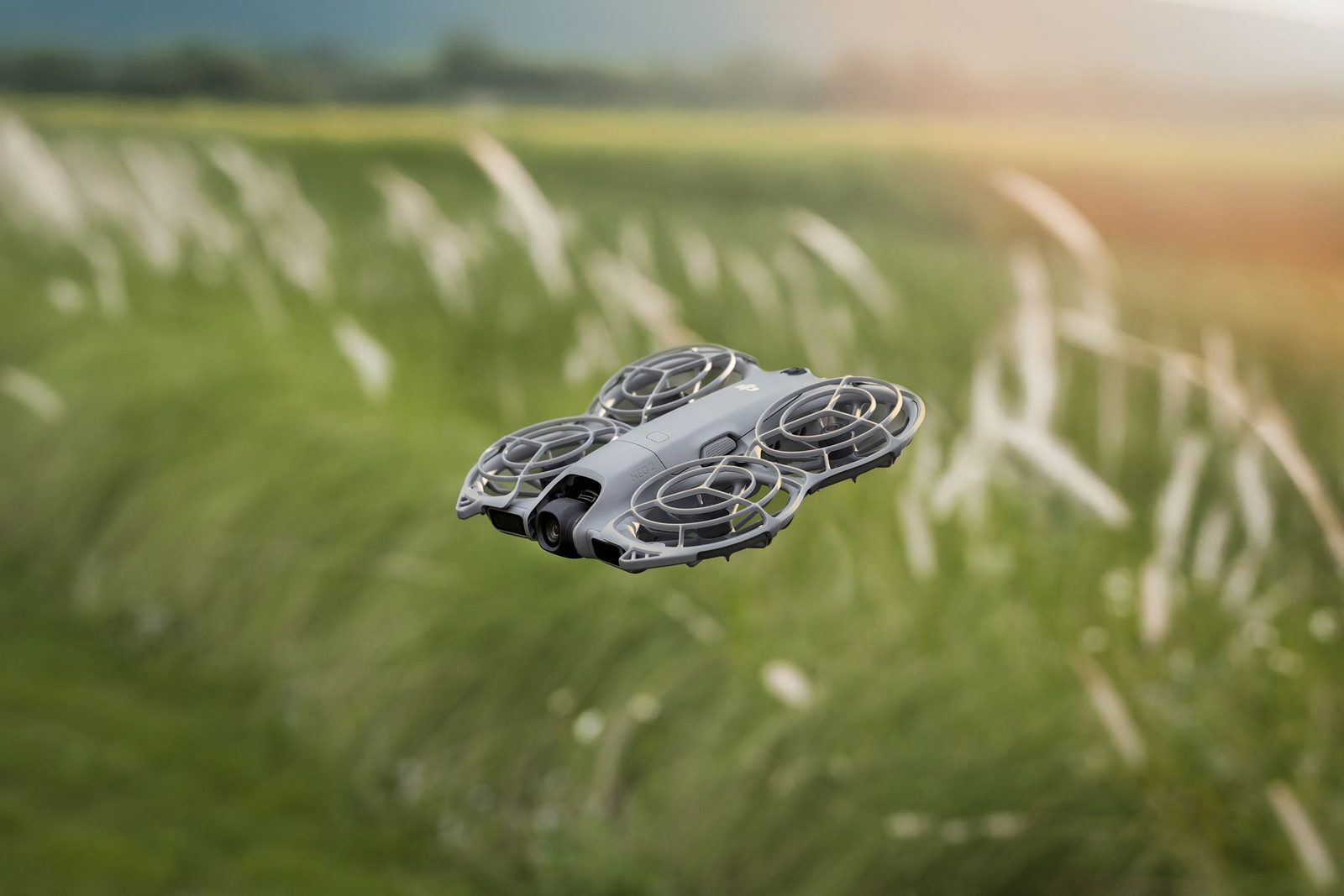
The CAA’s Drone Code makes the key point plainly: wind on the ground is often very different to the wind at height. A sheltered car park can feel calm while the air at 100m is properly lively. Hills, cliffs and coastlines make it more extreme.
What that means in practice:
- Check a forecast that shows gusts, not just average wind. Gusts are what catch a small drone out.
- Do a low test hover first. Climb to a few metres, watch how hard the drone works to hold position, then climb in stages. If it’s drifting or leaning hard at low height, it’ll be worse higher up.
- Fly upwind first. Head out into the wind while the battery is full, so the easy downwind leg is on the way home.
- Leave a bigger battery margin. The Mini 5 Pro manual warns that the drone may not be able to return home if the wind is too strong, and that battery use on Return to Home can’t be calculated accurately when wind speed differs between altitudes. Don’t rely on the app’s RTH estimate on a windy day.
- Give people more room. The Drone Code says that if poor weather means a greater risk to people, such as when it’s very windy, you should fly further away from them.
- Expect longer stopping distances. DJI’s Mini 5 Pro manual quotes a minimum braking distance of 30m in Sport mode, and 10m when climbing or descending in Sport or Normal mode, and those figures are for windless conditions.
Coastal flying deserves a special mention: wind off the sea can be steady and strong, and a drone pushed out over water has nowhere to land. Keep it close and keep it upwind.
Cold: what happens to batteries and drones
Lithium batteries hate the cold. DJI’s manuals for the Mini 4 Pro and Mini 5 Pro set out exactly what to expect:
- Capacity drops significantly between -10° and 5°C, so flights will be shorter.
- Below -10°C, the batteries can’t be used at all.
- Warm the battery before take-off. The Mini 5 Pro manual recommends at least 10°C, ideally above 20°C. The Mini 4 Pro manual says to keep the battery above 20°C for the best performance.
- Warm it up in the air or on the ground. The Mini 5 Pro manual suggests hovering for a while after take-off to warm the battery. The Mini 4 Pro manual says to power on the aircraft for a while first and take off once DJI Fly says the battery is warmed up.
- Cold makes wind worse. Both manuals warn that reduced battery capacity in the cold reduces the drone’s wind resistance. A windy, frosty day is a double hit.
- Height and cold together need extra care, according to both manuals, which matters if you’re flying in the hills.
Check the operating temperature for your model, too. Most current DJI drones are rated from -10°C, but the Lito 1 is rated from 0°C, as is the older Phantom 4 Pro V2.0. Don’t fly outside the range the maker gives.
It isn’t just the drone. The Drone Code reminds pilots that cold or wet weather can affect your own ability to control the drone safely. Numb thumbs make for clumsy stick inputs.
Warm hands help. Search Amazon for touchscreen-friendly winter gloves.
Rain, fog, snow and low sun
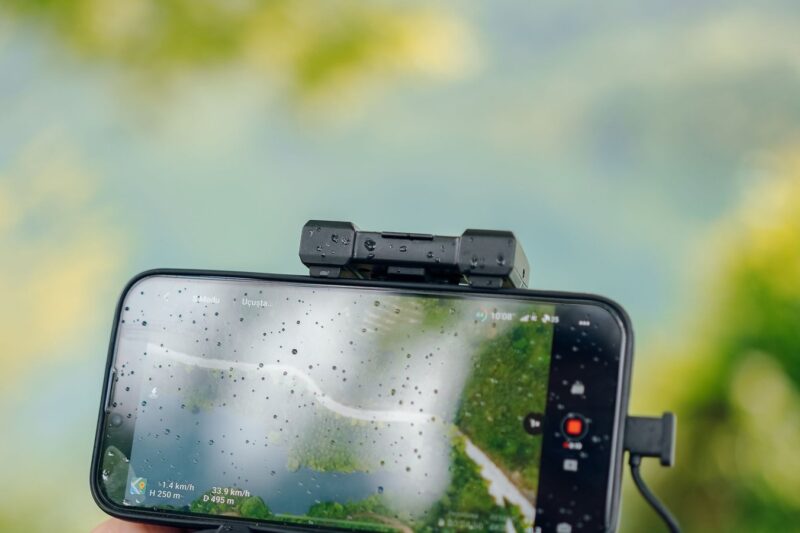
DJI’s manuals say not to fly in severe weather such as strong winds, snow, rain and fog. The Drone Code adds that rain, snow and cold can stop parts of a drone from working, fog can mean you lose sight of it, and glare from a low sun can do the same. Low winter sun is a common UK problem, so think about where the sun will be before choosing your flying direction. And remember that you must keep the drone in visual line of sight at all times.
A cold, windy day routine
- The night before: fully charge every battery indoors at room temperature. Our battery care guide explains why.
- Before you leave: check the forecast for gusts and temperature. If the gusts are near your drone’s rating, pick another day.
- On the way: keep batteries somewhere warm, such as an inside pocket or an insulated bag, not the boot.
- On site: insert the battery just before flying, power up, and let the app confirm the battery is warm enough.
- First minute: low hover, check for drift and listen to the motors.
- During the flight: go upwind first, stay closer than usual, and keep an eye on battery warnings.
- Land early. Bring it home with a healthy margin rather than at the last warning.
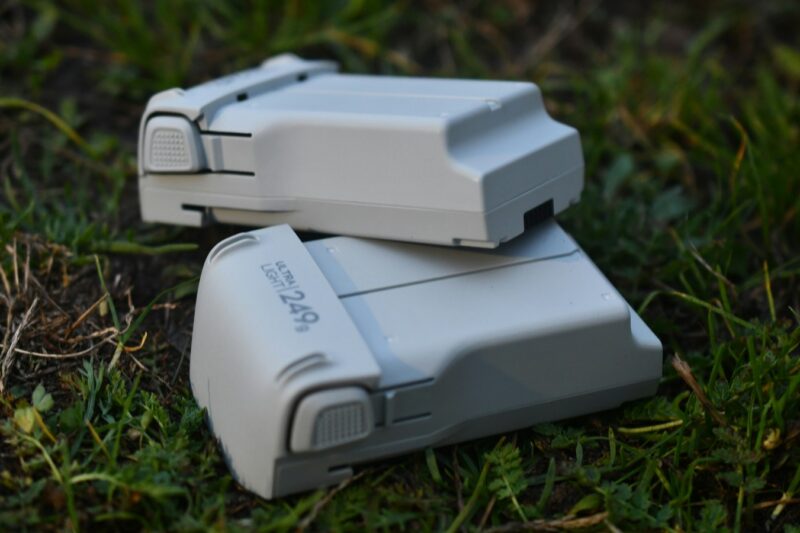
A spare battery means shorter, safer flights without cutting the day short. Search Amazon for a DJI Intelligent Flight Battery for your model.
Which drones cope best?
On DJI’s figures, the Mini 5 Pro, Air 3S and Mavic 4 Pro have the highest wind rating in the current range at 12 m/s. The Mini 4 Pro, Lito X1, Lito 1, Neo 2 and Flip are all rated at 10.7 m/s. If you fly a lot on the coast or in the hills, that difference is worth thinking about when you buy, and our Mini 5 Pro vs Mini 4 Pro comparison and best drone for beginners guide go into the other trade-offs.
Frequently asked questions
Can I fly my drone in 20mph wind?
20mph is about 8.9 m/s, which is under the 10.7 m/s rating of most current DJI drones, but close enough that a gust could push past it. Experienced pilots can fly in it with care, keeping the drone close and upwind. If you’re new, wait for a calmer day.
Why does my drone say the battery is too cold?
DJI’s batteries need to be warm enough to deliver power safely. Keep them warm before the flight and let the drone warm the pack up, as the manual describes, before taking off.
Will my drone fly in sub-zero temperatures?
Many DJI drones are rated down to -10°C, but expect much shorter flights. Some models, including the Lito 1, are rated only down to 0°C. Always check your model’s spec page.
Is it safe to fly in drizzle?
DJI’s manuals say not to fly in rain, and the Drone Code warns that water can stop parts of a drone working. Unless your drone is specifically rated for wet weather, stay grounded.